
'%3e%3cpath%20d='M19.3359%2018.2109L14.7344%2013.6094C15.875%2012.2188%2016.5625%2010.4375%2016.5625%208.49609C16.5625%204.04297%2012.9492%200.429688%208.49609%200.429688C4.03906%200.429688%200.429688%204.04297%200.429688%208.49609C0.429688%2012.9492%204.03906%2016.5625%208.49609%2016.5625C10.4375%2016.5625%2012.2148%2015.8789%2013.6055%2014.7383L18.207%2019.3359C18.5195%2019.6484%2019.0234%2019.6484%2019.3359%2019.3359C19.6484%2019.0273%2019.6484%2018.5195%2019.3359%2018.2109ZM8.49609%2014.957C4.92969%2014.957%202.03125%2012.0586%202.03125%208.49609C2.03125%204.93359%204.92969%202.03125%208.49609%202.03125C12.0586%202.03125%2014.9609%204.93359%2014.9609%208.49609C14.9609%2012.0586%2012.0586%2014.957%208.49609%2014.957Z'%20fill='%23535B62'/%3e%3c/g%3e%3cdefs%3e%3cclipPath%20id='clip0_12799_29299'%3e%3crect%20width='20'%20height='20'%20fill='white'/%3e%3c/clipPath%3e%3c/defs%3e%3c/svg%3e)

Types of Gearboxes
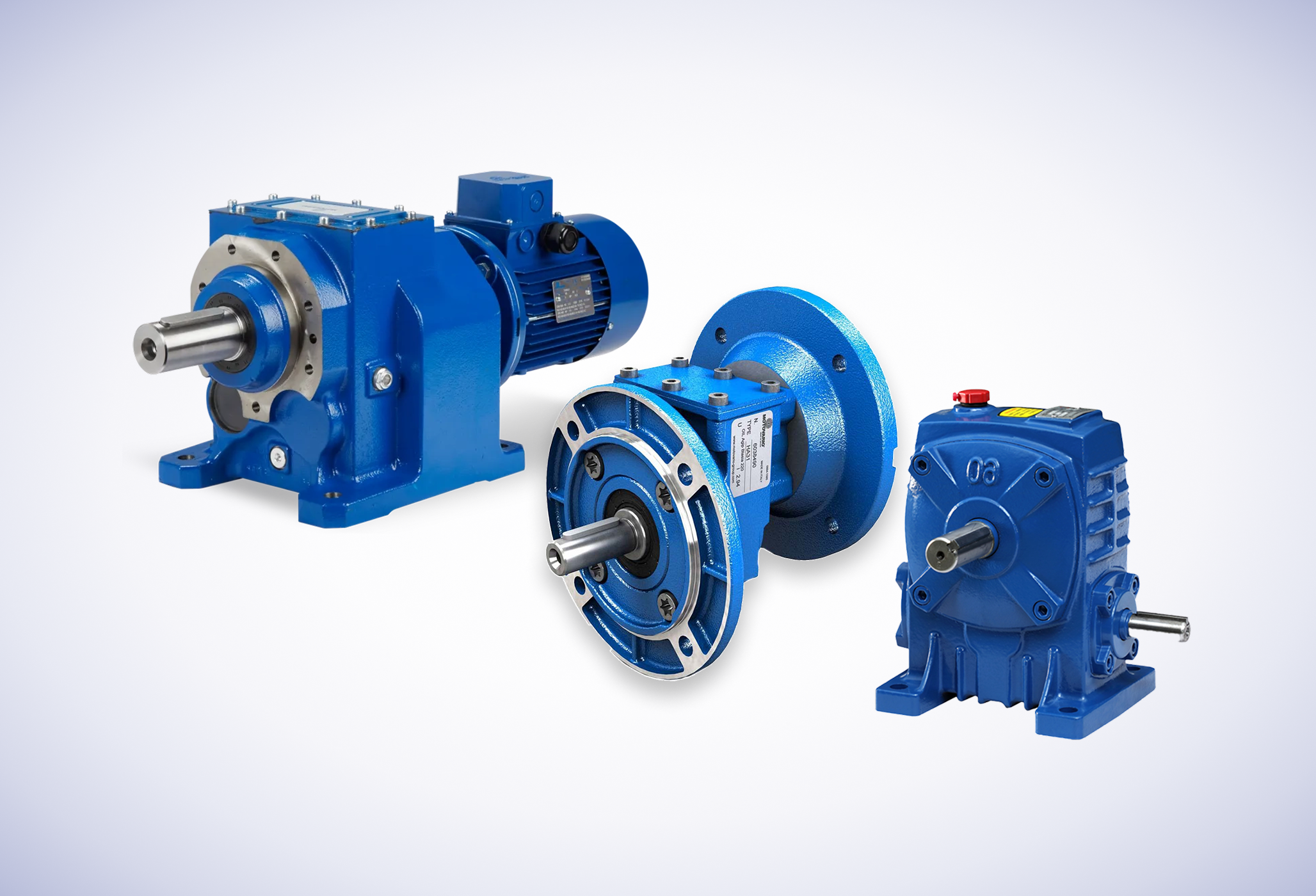
Gearboxes, also known as gear drives, play a crucial role in various industrial applications, serving as the mechanical heart that transmits power from motors to driven equipment. Understanding the nuances of gearbox shaft arrangement and mounting options is essential for selecting the optimal solution for your specific needs.
Gearbox Shaft Arrangement
The shaft arrangement of a gear drive refers to the positioning of high-speed and low-speed shaft extensions with each other. This arrangement is influenced by factors such as the motor and driven equipment's location and the application's physical constraints. It's imperative to grasp both aspects to make an informed decision about the most suitable gearbox for your application.
The orientation of high and low-speed shafts may seem straightforward, but the choice between concentric, parallel, and right-angle gear drives is driven by practical considerations, primarily space limitations within a system. The selected type of gearbox dictates the placement of your driving equipment or motor, as the shafts are oriented differently for each type.
Inline Gearboxes
An inline gearbox, often known as a concentric gear drive, boasts high and low-speed shafts aligned on the same horizontal and vertical planes. This alignment allows for placing multiple units in a row due to the straight-line arrangement of their shafts. Notably, the planetary gearbox, a subtype of concentric inline gear drives, excels in applications demanding higher torque, thanks to its robust design.
Parallel Gearbox
In a parallel gear reducer, high and low-speed shafts share the same horizontal plane and run parallel to each other. This configuration is typically chosen for applications requiring substantial torque and high horsepower.
Right Angle Gearbox
A right-angle gearbox features a 90-degree relationship between the high-speed and low-speed shafts, making it ideal for applications where the driving equipment needs to be close to the driven equipment. This orientation minimizes shaft bending loads, making it suitable for conveyors and similar applications.
Gearbox Mounting
The mounting of a gearbox into a system can be done in two ways: foot-mounted or shaft-mounted. The choice depends on space and structural limitations within the system.
Foot-Mounted Gearboxes
Foot-mounted gear drives are fixed to a foundation or baseplate through bolt holes in their feet. While seemingly straightforward, this method requires a rigid foundation to support the drive and handle the torque passing through it. Misalignments caused by soft-foot conditions, where the feet are not level, can be avoided by ensuring proper connection to motor and driven equipment foundations.
Shaft-Mounted Gearboxes
In situations where placing a foundation is challenging, shaft-mounted gear drives provide a solution. The low-speed shaft of the gear drive is rigidly connected to the driven equipment shaft. This connection can be achieved using a hollow low-speed shaft secured around the solid shaft of the driven equipment or through a rigid flange coupling.
The term "shaft mount" has come to represent relatively small gear drives designed without feet, tailored for light conveying applications.
Conclusion
In conclusion, understanding gearbox shaft arrangement and mounting options is pivotal in selecting the right gearbox for your application. Whether it's the precision of a concentric gearbox, the power of a parallel gearbox, or the proximity advantage of a right-angle gearbox, each type has its unique benefits.
HVH Industrial Solutions is an authorized distributor of Flender, Rossi, Rexnord Falk, SEW Eurodrive and many other top-notch gearbox manufacturers. We work closely with their engineering team to provide superior customer service and engineering support.
If you have any questions, write to us via live chat or call or send us a quote request. The HVH team is always ready to help you.